
 (317) 638-3472
 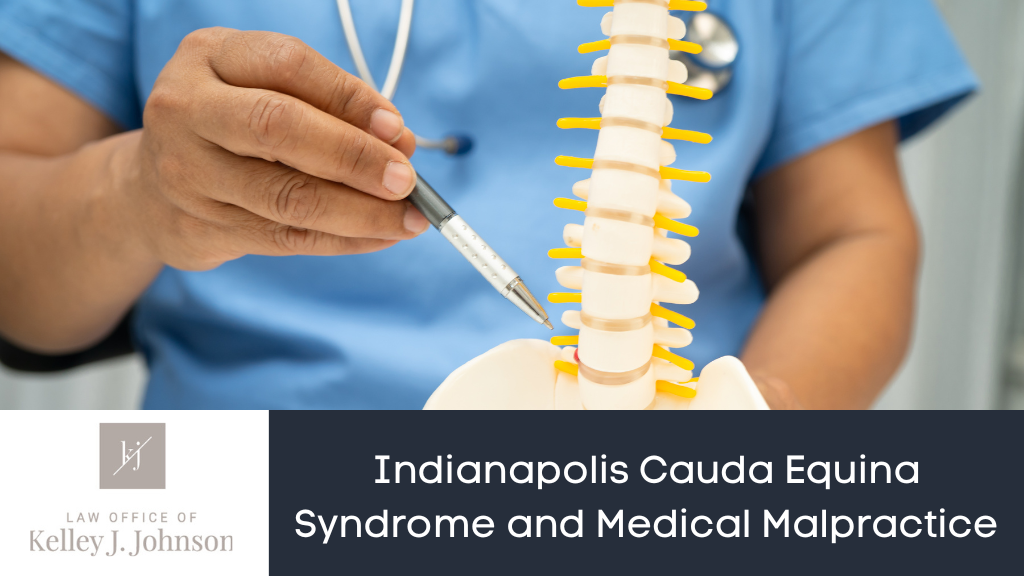 Cauda equina syndrome can change a person’s life quickly. If you’ve been experiencing severe back pain, numbness, bladder problems, or weakness in the legs, you may be feeling scared and confused. What if a medical professional had caught your condition sooner? If you’re facing long-term harm after a possible medical error and believe there’s a link between your cauda equina syndrome and medical malpractice, it’s time to speak with an Indianapolis medical malpractice law firm.
At the Law Office of Kelley J. Johnson, we focus exclusively on medical negligence cases. If you’re struggling with cauda equina syndrome symptoms, we can explain your legal options and outline your possible next steps. Contact us today to get started with a free initial consultation.
How Our Indianapolis Cauda Equina Syndrome Attorneys Can Help You
With years of experience focusing on serving victims of medical negligence, the Law Office of Kelley J. Johnson is prepared to pursue medical malpractice claims through the court system as well as through the Indiana Patient’s Compensation Fund. Our years in practice have helped us develop productive relationships with expert witnesses across various specialties whose insights can provide valuable support for your Indiana medical malpractice claim. Our firm is well-equipped to provide the legal representation you need and deserve.
When you need a medical malpractice lawyer to help you pursue a claim against a negligent healthcare provider, the Law Office of Kelley J. Johnson can help you by:
- Reviewing your medical records to understand when symptoms began and how your healthcare providers responded
- Identifying whether warning signs should have led to urgent testing
- Calculating the impact of the injury, including your medical expenses, lost wages, reduced mobility, physical therapy, pain and suffering, and long-term care needs
- Handling communication with hospitals, insurers, and defense attorneys so you can focus on your health and recovery
We take pride in our track record in complex medical malpractice cases. As one client wrote of their experience with us:
“If you are looking for a medical malpractice attorney, I highly recommend Kelley Johnson. Kelley and her team exceeded my expectations and gave me exceptional representation. They go above and beyond with their legal expertise and knowledge in medical malpractice to secure a successful outcome. They responded to my case with compassion and dedication and kept me informed about each step of the process. They are an outstanding legal team.” – Sherry B.
What Is Cauda Equina Syndrome?
Cauda equina syndrome is a serious condition that affects the bundle of nerves at the lower end of the spinal cord. These nerves help control movement and feeling in the legs, feet, bladder, bowel, and pelvic area. When they become compressed, symptoms can progress quickly and may become permanent without prompt treatment.
Common warning signs that could point to cauda equina syndrome and require urgent medical attention include:
- Severe pain in the lower back
- Pain that travels down one or both legs
- Numbness or tingling in the groin or inner thighs
- Leg weakness
- Difficulty walking
- Bladder and bowel function dysfunction, including difficulty urinating, inability to urinate, or sudden loss of bowel and bladder control
- Sexual dysfunction
Causes of Cauda Equina Syndrome
While the overarching cause of cauda equina syndrome is pressure on the nerve roots at the lower end of the spine, a variety of underlying problems can increase the likelihood of the condition. Some of the most common causes of cauda equina syndrome include the following:
- Herniated Discs – A ruptured or displaced disc in the lower back can press against the cauda equina nerves. Large lumbar disc herniations are among the more common causes of this condition.
- Spinal Trauma or Tumors – A serious fall, car accident, penetrating injury, or spinal tumor may compress or damage these nerves.
- Infections or Inflammation – Abscesses, severe infections, or inflammatory conditions near the spinal canal can create swelling or pressure that interferes with nerve function.
How Misdiagnosis or Delayed Diagnosis Occurs
A patient or their medical team may miss cauda equina syndrome when the condition’s early symptoms resemble those of other back problems. Because the condition can worsen quickly, delays in recognizing urgent warning signs may affect a patient’s outcome. A delayed or missed diagnosis may involve:
- Symptoms Mistaken for Routine Back Pain – Severe back pain, leg pain, numbness, or weakness may be treated as a muscle strain or common disc issue without further evaluation.
- Failure to Order Appropriate Tests – Medical providers may fail to order timely imaging, such as an MRI, when symptoms suggest possible nerve compression.
- Failure to do a Proper Physical Exam – Medical providers may fail to do a proper physical exam, specifically checking for leg weakness, “saddle” numbness, and rectal tone.
- Delayed Referral to Specialists – A delay in involving a spine surgeon, neurologist, or emergency specialist may postpone needed treatment.
When someone else’s negligence causes you physical pain, permanent damage, and other devastating consequences, you deserve fair compensation for your losses. Contact our law firm today to learn about how you can pursue legal action.
When Cauda Equina Syndrome Becomes Medical Malpractice
While not every case of cauda equina syndrome involves medical malpractice, you may have a valid claim if a medical provider’s actions, or failure to act, fell below the accepted medical standards and caused you preventable harm. Some typical examples may include:
- Ignoring Clear Red Flags – Symptoms such as bladder or bowel dysfunction, saddle numbness, severe radiating pain, or worsening leg weakness may signal a medical emergency. A provider who dismisses these symptoms may delay the care the patient urgently needs.
- Failure to Act Promptly – Cauda equina syndrome requires quick evaluation and treatment. Delays in ordering imaging, consulting a specialist, transferring a patient, or arranging surgery may increase the risk of permanent injury.
- Deviation from Accepted Medical Standards – Medical malpractice may occur when a provider doesn’t act as a reasonably careful provider would under similar circumstances. Examples of these failures may include incomplete exams, poor communication, or a lack of follow-up after concerning test results.
Understand Your Legal Options After Medical Negligence
If you’re experiencing symptoms of cauda equina syndrome and suspect a provider’s negligence may be the root cause, turn to the Law Office of Kelley J. Johnson to discuss your legal rights and options. We have experience handling Indianapolis cauda equina syndrome malpractice cases and have a track record of recovering cauda equina syndrome malpractice compensation amounts that make it possible for our clients to move forward after these injuries. Contact us today to arrange a free consultation and pay nothing for the legal representation you deserve unless and until we recover compensation for you.